

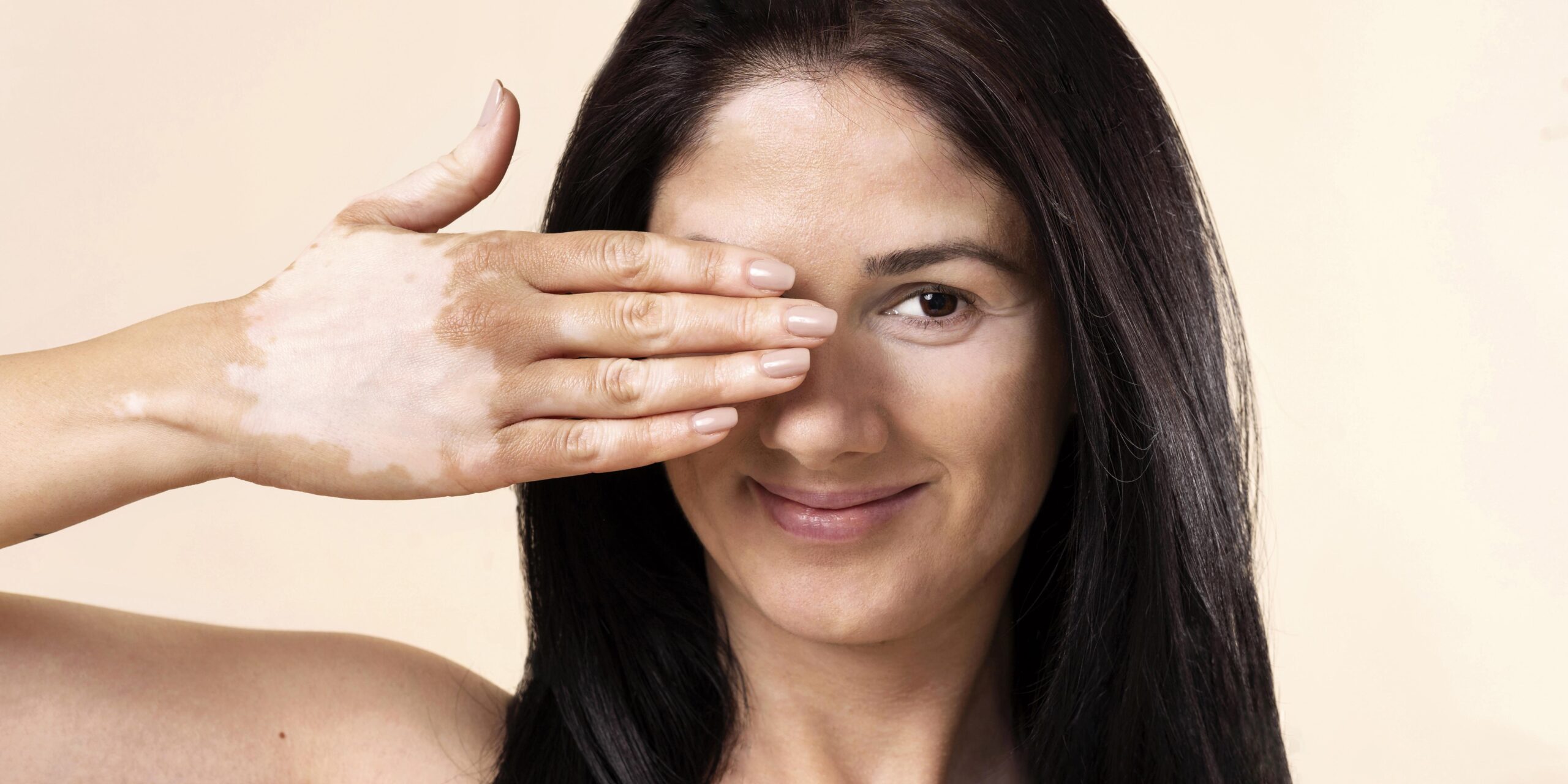
Vitiligo is a chronic autoimmune skin condition that causes white patches due to loss of melanin. The main types of vitiligo are non segmental, segmental, focal, mucosal and universal. Each type differs in pattern, progression and treatment response. Early diagnosis and personalised care improve long-term management and skin stability.
Understanding the types of vitiligo helps individuals and healthcare providers make informed decisions about treatment, prognosis and lifestyle adjustments. Vitiligo is not contagious, and its progression can vary widely between individuals. For people seeking comprehensive health support that goes beyond conventional treatments, experts like Smriti Kochar, India’s leading Gut Health Coach and Functional Nutritionist, can offer insight into systemic factors like inflammation and immune balance that influence overall well-being. Exploring the root causes and integrative strategies alongside dermatological care can be empowering.
What Is Vitiligo
Vitiligo is a long term autoimmune disorder in which the immune system attacks melanocytes, the cells responsible for producing melanin. Melanin gives skin, hair and eyes their colour. When melanocytes are damaged or destroyed, patches of skin lose pigment and turn white.
The condition can develop at any age, although many cases begin before the age of thirty. It affects men and women equally and occurs in all ethnic groups. While vitiligo is not physically painful, it can have a significant emotional and psychological impact, particularly when visible areas such as the face or hands are involved.
Vitiligo is not contagious and cannot be transmitted through touch, sharing personal items or close contact. It is also not caused by poor hygiene. In most cases, it is linked to immune dysfunction and sometimes to genetic predisposition.
Common areas affected include
- Face and neck
- Hands and fingers
- Wrists and elbows
- Knees and ankles
- Around the eyes and mouth
- Scalp leading to white hair patches
The course of vitiligo is unpredictable. Some individuals experience slow progression, while others may notice rapid changes followed by stability.
Understanding the Types of Vitiligo
Identifying the correct type is essential because treatment decisions and prognosis often depend on classification. The types of vitiligo are grouped based on distribution pattern and extent of depigmentation.
Non Segmental Vitiligo
Non segmental vitiligo is the most common form, accounting for the majority of cases. It typically presents as symmetrical white patches on both sides of the body.
Characteristics include
- Patches appearing on both hands or both knees
- Involvement of face, neck and extremities
- Gradual spread over time
- Periods of progression and stability
This type is strongly associated with autoimmune disorders such as thyroid disease. Because the immune involvement is systemic, treatment usually involves medical therapies such as topical medications and light therapy.
Subtypes of non segmental vitiligo include
- Acrofacial vitiligo affecting hands, feet and face
- Generalised vitiligo affecting widespread areas
- Mixed vitiligo combining segmental and non segmental features
Segmental Vitiligo
Segmental vitiligo is less common and usually appears on one side of the body. It often develops at a younger age and progresses rapidly for a limited time before stabilising.
Key features include
- Unilateral distribution
- Early onset in childhood or adolescence
- Faster initial spread
- Greater stability after early progression
Unlike non segmental vitiligo, this type is less frequently linked to other autoimmune conditions. Because it often stabilises, surgical interventions such as melanocyte transplantation may be considered in suitable cases.
Focal Vitiligo
Focal vitiligo refers to one or a few isolated depigmented patches that do not follow a symmetrical or segmental pattern.
Features include
- Limited number of spots
- No predictable distribution
- Often stable for extended periods
In some individuals, focal vitiligo remains localised indefinitely. In others, it may later evolve into non-segmental vitiligo.
Mucosal Vitiligo
Mucosal vitiligo affects mucous membranes rather than typical skin surfaces.
Common areas include
- Lips
- Inner mouth
- Genital region
Because these areas lack hair follicles, repigmentation may be more challenging. Treatment response varies depending on the extent of involvement.
Universal Vitiligo
Universal vitiligo is rare and involves extensive depigmentation across most of the body.
Characteristics include
- Large areas of pigment loss
- Minimal remaining normal skin tone
- Possible need for depigmentation therapy for uniform appearance
This form significantly alters skin colour and requires careful medical supervision for cosmetic and psychological management.
Causes of Vitiligo
The exact cause of vitiligo is multifactorial and not completely understood. Research suggests several contributing factors.
- Autoimmune dysfunction is considered the primary mechanism. The immune system mistakenly attacks melanocytes, leading to pigment loss.
- Genetic factors also play a role. Individuals with a family history of vitiligo or other autoimmune disorders have a higher risk.
- Oxidative stress may damage melanocytes and trigger immune reactions.
- Environmental triggers such as skin trauma, severe sunburn or emotional stress may initiate or worsen the condition in predisposed individuals.
Vitiligo is often associated with other autoimmune disorders including thyroid disease, type one diabetes and pernicious anaemia.
Symptoms and Early Signs
The hallmark symptom of vitiligo is the appearance of milky white patches on the skin. However, early signs may be subtle.
Common symptoms include
- Light coloured spots that gradually enlarge
- Premature greying of scalp hair, eyelashes or eyebrows
- Loss of colour inside the mouth
- Increased sensitivity to sunlight
Patches may remain stable or increase in size over time. In some cases, repigmentation may occur partially without treatment.
Diagnosis of Vitiligo
Vitiligo is usually diagnosed through clinical examination by a dermatologist. The distinctive pattern of depigmentation often makes diagnosis straightforward.
Diagnostic tools may include
- Detailed medical history
- Physical examination
- Wood lamp examination to highlight pigment loss
- Blood tests to evaluate autoimmune markers
- Rarely is a skin biopsy
Early diagnosis allows prompt intervention, which may improve treatment outcomes.
Treatment Options
Treatment aims to restore pigment, stop progression and improve cosmetic appearance. There is no permanent cure, but many therapies can provide meaningful improvement.
- Topical treatments include corticosteroids and calcineurin inhibitors that reduce immune activity in affected areas.
- Light therapy, particularly narrowband ultraviolet B therapy, stimulates melanocyte activity and is widely used for non-segmental vitiligo.
- An excimer laser may be beneficial for small patches.
- Surgical options such as skin grafting and melanocyte transplantation may be considered in stable segmental cases.
- Depigmentation therapy may be an option in universal vitiligo when repigmentation is unlikely.
Lifestyle measures such as sun protection, stress management and balanced nutrition support overall skin health and immune balance.
Take Control of Your Health with Expert Support
Understanding the types of vitiligo equips you with essential knowledge to navigate treatment options and long-term management. While dermatological care focuses on pigment restoration, supporting overall immune balance, inflammation control and nutritional health plays a meaningful role in holistic wellness.
If you are looking for personalised guidance alongside clinical care, especially for immune, gut, or inflammatory concerns that often accompany chronic conditions, consider consulting Smriti Kochar. Smriti Kochar is India’s #1 Gut Health Coach and Functional Nutritionist, Founder of the functional supplements brand The Science of Good Health, and a recognised expert in functional medicine and whole-body healing. Her approach combines scientific precision with personalised care to help you address root causes and build sustainable health strategies.
Book a consultation with Smriti Kochar to explore tailored nutritional and lifestyle support that complements your vitiligo care and overall wellness goals.
Frequently Asked Questions
The main types of vitiligo are non segmental, segmental, focal, mucosal and universal. They differ in distribution pattern, progression and response to treatment.
Vitiligo often begins as a small pale patch that gradually becomes white. It may appear after stress, skin injury or without any clear trigger.
Yes, vitiligo is widely recognised as an autoimmune disorder in which the immune system attacks pigment producing cells.
In some individuals, especially with non segmental vitiligo, patches may expand over months. In segmental vitiligo, rapid early spread may occur before stabilisation.
Segmental and focal vitiligo often remain stable because the immune activity may be more localised rather than systemic.
Complete spontaneous recovery is rare. Some individuals experience partial repigmentation, particularly with treatment.
Yes, vitiligo can develop in childhood. Segmental vitiligo is more commonly seen in younger patients.
There is no single best treatment. The most effective option depends on the type of vitiligo, the extent of pigment loss, age and overall health condition.

